
About
Russ Wilcox
Shaping the future in which humanity and AI advance together.
About
Shaping the future in which humanity and AI advance together.
The Arc
He started at sixteen with the U.S. Geological Survey, presented to the American Geophysical Union at seventeen, and co-authored five peer-reviewed publications before twenty-two. A degree in physics, an advanced reinforcement learning certification from MIT, and sixteen years building machine learning systems.
Today: three consecutive years at Davos, fourteen sessions in 2026 alone. Policy Chairman of the American Society for AI. Founder and CEO of ArtifexAI. Author of The Pacific Divide, read in the rooms it writes about. Briefings for the National Security Council, the State Department, the Senate, and the State House. A U.S. delegate to the United Nations.
The through line is one argument, The Reconvergence Problem, and one doctrine, cognitive sovereignty. The mission is keeping humanity at the center of intelligence.
In the Rooms

Governor Maura Healey
Massachusetts

Doug Emhoff
Second Gentleman of the United States, 2021–2025

Mayor Michelle Wu
Boston

Ambassador Ralf Heckner
Switzerland · USA House, Davos

Tom Leung
Quincy School Committee

Shyalpa Tenzin Rinpoche
Make peace more fashionable than war
The Strategist
Quincy, 2025. A first-time school committee candidate whose own model gave a newcomer 3.7 percent odds of finishing first. Tom Leung finished first, by 662 votes, on an AI-driven data and messaging architecture built from a 14,260-voter file: the first Asian American elected to Quincy’s School Committee.
A Massachusetts district’s ninety school administrators, August 2026. A professional development platform, built and deployed, that produced a statistically significant shift in how the district reasons about AI: p < .001.
And the statute: The Digital Commonwealth Act, a 39-page data-sovereignty framework filed in the Massachusetts legislature, with the analysis behind it now in the UK parliamentary record.
“The best campaign data I’ve ever seen.”
Congressional Staffer
“A brilliant technologist and strategic thinker. One of the preeminent minds in AI today.”
Vice President · Brown Brothers Harriman
“Excellent work, the information is very relevant.”
Deputy Senior Director · National Security Council
“This is brilliant... a burgeoning threat requiring more urgency and an integrated push from government, industry, and the public.”
A former Deputy Assistant Secretary of Defense
From here
One letter when there is something to say, with every source. The investigations arrive here first.
For boards, agencies, funds and conference programs. Replies are read personally.
For Programs & Press
Three lengths, kept current here. Copy what the program needs.
The Introduction
Russ Wilcox is a three-time Davos speaker, Policy Chairman of the American Society for AI, and the analyst behind The Pacific Divide. He has briefed the National Security Council, the State Department, the United States Senate, and the Massachusetts State House, and served as a U.S. delegate to the United Nations. He coined the doctrine of cognitive sovereignty. Please welcome Russ Wilcox.
The Program Bio
Russ Wilcox is a three-time Davos speaker, delivering fourteen sessions across the 2026 meeting alone, and the Policy Chairman of the American Society for AI. He is the founder and CEO of ArtifexAI, a municipal intelligence company, and the author of The Pacific Divide, a strategic intelligence brief on Chinese AI read by government officials and corporate boards. He has briefed the National Security Council, the State Department, the United States Senate, and the Massachusetts State House, served as a U.S. delegate to the United Nations Civil Society Conference in Nairobi, and published in The Diplomat and the Jamestown Foundation's China Brief. His signature keynote, The Reconvergence Problem, argues the case for cognitive sovereignty. He is based in Boston.
The Long Bio
Russ Wilcox began his career at sixteen with the U.S. Geological Survey, presented research to the American Geophysical Union at seventeen, and co-authored five peer-reviewed publications before twenty-two. He holds a degree in physics and an advanced reinforcement learning certification from MIT, with sixteen years building machine learning systems. Today he is a three-time Davos speaker, Policy Chairman of the American Society for AI, and founder and CEO of ArtifexAI, a municipal intelligence company. His strategic brief, The Pacific Divide, reads Chinese primary sources in the original and has repeatedly identified strategic moves well before mainstream analysis. The National Security Council called his work excellent and very relevant. A former Deputy Assistant Secretary of Defense called it brilliant. He has briefed the National Security Council, the State Department, the United States Senate, and the Massachusetts State House. He served as a U.S. delegate to the United Nations Civil Society Conference in Nairobi, has appeared as an expert witness on big data in federal and state courts, and has been featured three times in Forbes. His writing appears in The Diplomat and the Jamestown Foundation's China Brief. As a strategist, he architected the data and messaging system behind one of the first documented AI-driven election wins in the United States, a 2025 Massachusetts race his own model gave a newcomer 3.7 percent odds of winning outright. His signature argument, The Reconvergence Problem, names the century's central question and answers it with a doctrine he coined: cognitive sovereignty. His mission is keeping humanity at the center of intelligence.
Headshots and the full speaker kit: write to him directly
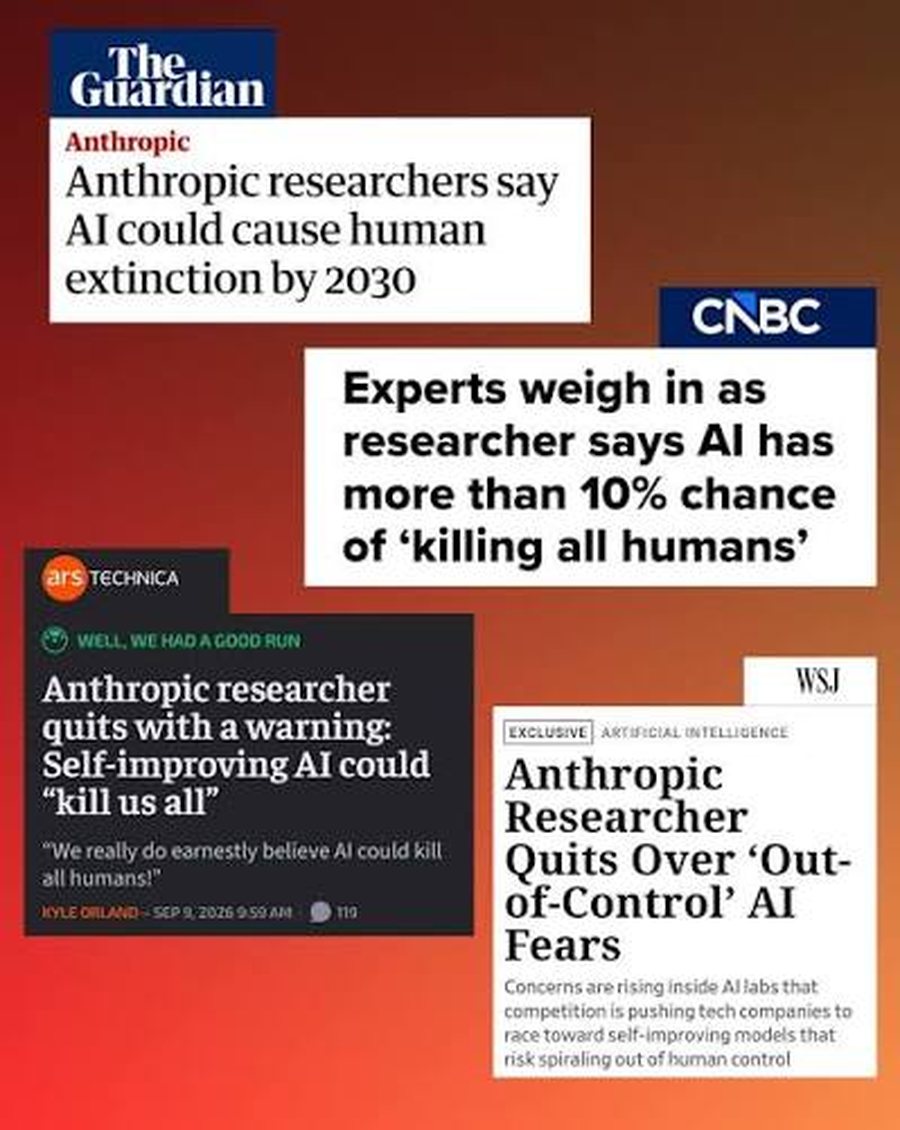 The coverage
Before the coverage catches up
Read the next one first.
The headlines said the machine might kill you. The document under them says something else. One letter when there is something to say. No sponsor, no advertiser.